Roof Rats in the Attic: Identifying Entry Points, Sounds, and Exclusion Steps
Learn how to detect roof rats in your attic, distinguish their nighttime sounds from other pests, locate vulnerable roofline entry points, and execute effective exclusion.
The Challenge of Roof Rats in Attic Spaces
Roof rats (Rattus rattus), frequently referred to as black rats or ship rats, are agile climbers that prefer elevated nesting sites. Unlike Norway rats, which tend to burrow underground or establish nests in basements and lower levels, roof rats thrive in high places. In residential neighborhoods with mature trees, power lines, and architectural rooflines, attics provide an ideal sanctuary. These spaces offer warm shelter, soft insulation for nesting material, and protection from ground predators.
An undetected roof rat population can cause extensive damage to a home. Beyond the disruption of scratching sounds in the middle of the night, rodents present serious structural and safety hazards. They continuously gnaw on building materials, including wooden trusses, PVC plumbing lines, and electrical wiring, which elevates the risk of house fires. Understanding how these pests access your roof, recognizing the sounds they make, and taking decisive exclusion steps is essential to protecting your property.
Recognizing the Sounds of Roof Rats Overhead
Because roof rats are primarily nocturnal, homeowners often hear them before seeing any physical evidence. Their daily activity typically picks up about an hour after sunset and continues sporadically until just before dawn. Learning to interpret the noises coming from your ceiling helps distinguish roof rats from other common attic invaders such as squirrels, raccoons, or birds.
- Light Scurrying and Pattering: Roof rats move quickly across ceiling joists and through loose blown-in or batt insulation. You may hear light, rapid tapping or scurrying sounds moving from one side of the house to the other.
- Rhythmic Gnawing: Rodents have open-rooted incisors that grow continuously throughout their lives. To keep their teeth worn down and sharp, roof rats gnaw on timber, ceiling drywall, and plastic conduits. This generates a persistent, rhythmic scratching or scraping noise that can resonate through ceiling drywall.
- Scratching Inside Wall Voids: Roof rats do not stay confined to attic floors; they travel down wall cavities to access lower levels or forage for food in kitchens and pantries. Scratching or scrambling sounds behind bedroom walls during the dead of night are strong indicators of rodent movement.
- Faint Squeaks and Vocalizations: While adult roof rats tend to be relatively quiet while moving, nesting females and pups communicate using high-pitched chirps, squeaks, and soft chattering, especially if nests are disturbed or crowded.
If noises occur primarily during broad daylight, squirrels are often the more likely culprit, as they are diurnal. If heavy, thumping steps are heard at night, larger wildlife like raccoons or opossums may be involved. Light, intermittent nighttime movement and gnawing almost always point to mice or roof rats.
Common Entry Points Around the Roofline
Roof rats have slender, flexible bodies that allow them to squeeze through gaps surprisingly small for their size. An adult roof rat can slip through an opening as narrow as a nickel (roughly one-half inch to three-quarters of an inch in diameter). Their climbing prowess enables them to scale brick walls, textured siding, downspouts, and utility cables with ease. Mature tree canopies hanging over roofs serve as natural bridges directly onto shingles.
Soffits and Fascia Gaps
Over time, exposure to moisture and temperature fluctuations can cause wooden fascia boards and soffit panels to warp or rot. Roof rats take advantage of softened wood, chewing through small construction gaps where the roof decking meets the fascia board. These junction areas, commonly called builder's gaps, are among the most frequent points of entry.
Attic Vents and Ridge Vents
Homes require ventilation to prevent heat and moisture buildup, but these vents are prime targets for rodents. Standard plastic or thin aluminum vent screens on dormer vents, gable vents, and turbine exhaust vents can be easily bypassed or chewed through. Ridge vents running along the peak of the roof often have pliable foam or light plastic end caps that deteriorate, leaving open tunnels straight into the attic ridge.
Roof Penetrations and Pipe Jacks
Plumbing vent stacks, air conditioning chase lines, and exhaust fan ductwork exit through the roof deck. Rubber pipe boots can crack under intense heat, and flashing may pull away from shingles. A gap around a vent pipe allows rodents to drop down along the pipe directly into ceiling voids.
Eaves and Gable Junctions
Where rooflines intersect at varying angles, builders often leave small architectural openings beneath overhangs. Roof rats exploit these sheltered corners, where they are protected from rain and wind while gnawing their way into the attic envelope.
Confirming an Infestation: Signs Beyond Sound
If you suspect roof rats are residing above your ceiling, a visual inspection of accessible attic areas and the roof perimeter will typically reveal additional physical evidence.
- Droppings: Roof rat droppings are typically 0.25 to 0.5 inches long with pointed ends and a dark, curved spindle shape. This contrasts with Norway rat droppings, which are larger with blunt ends, and mouse droppings, which are substantially smaller.
- Rub Marks (Sebum Trails): The fur of roof rats contains natural oils and picks up soot and dirt. As they travel the same paths along roof rafters, wall studs, and joists repeatedly, they leave dark, greasy smudges known as sebum marks.
- Disturbed Insulation: Look for distinct pathways or sunken tunnels pressed into fiberglass or cellulose insulation. You may also find circular nesting bowls packed with shredded insulation, paper, dried leaves, and attic storage debris.
- Chewed Wiring and Wood: Inspect visible electrical lines and timber plates for teeth marks. Fresh gnaw marks appear lighter in color, whereas older marks darken with time and oxidation.
Step-by-Step Exclusion and Removal Strategy
Eradicating roof rats requires a methodical approach. Simply setting a few traps without sealing entry points invites new rodents to take the place of those removed. Conversely, sealing every entry point without removing trapped animals can lead to dying rodents trapped within walls, producing unpleasant odors. Successful control relies on a balanced process of inspection, exclusion, and reduction.
1. Trim Overhanging Tree Limbs and Clear Climbing Paths
Begin by eliminating easy access to the roof. Prune tree branches back so they sit at least six to eight feet away from roof edges. Trim climbing vines, such as English ivy or bougainvillea, off exterior masonry, and consider placing rodent guards around downspouts and conduit pipes that run vertically up the structure.
2. Seal Exterior Entry Holes with Durable Materials
Wood, standard expanding foam, and light caulking will not stop roof rats; they can chew through these materials in a single evening. Use professional-grade exclusion materials:
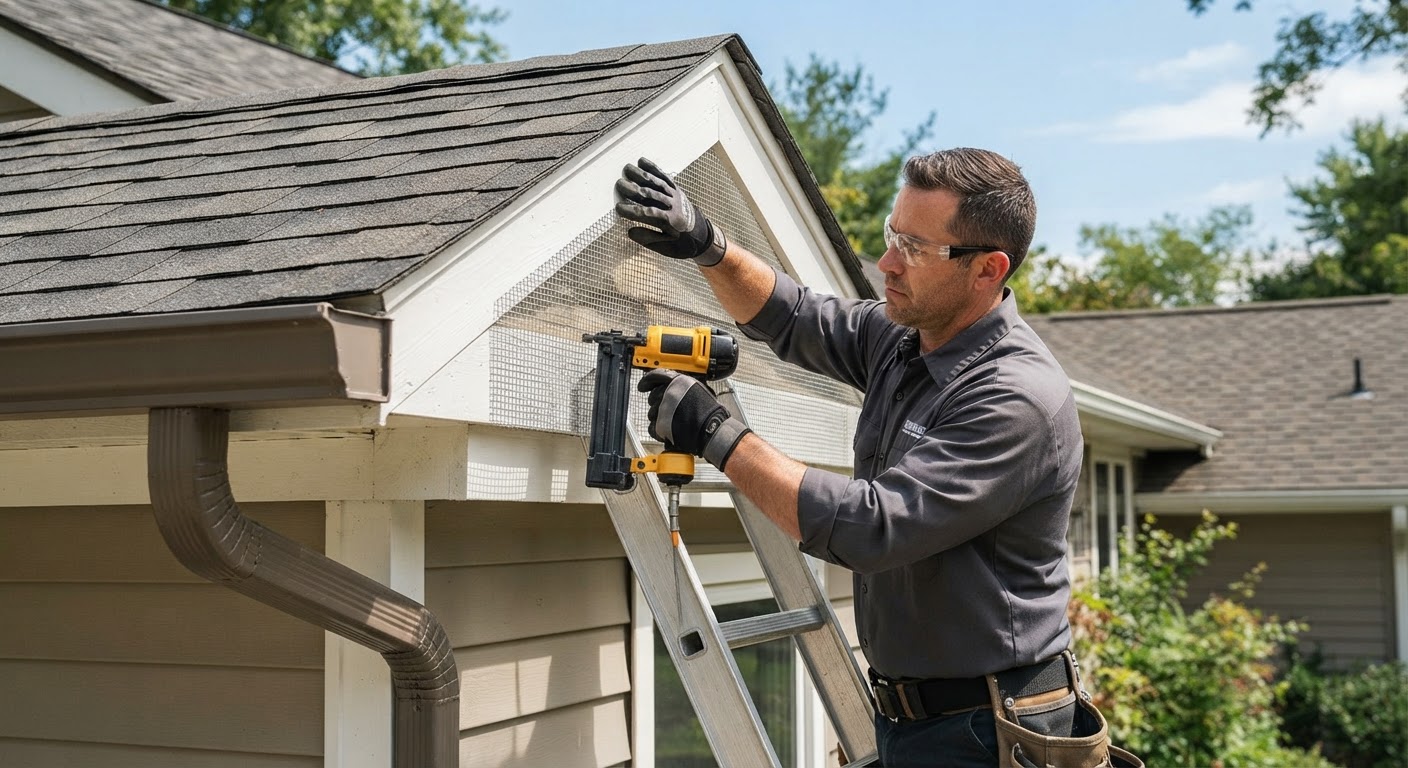
- Galvanized Hardware Cloth: Install 1/4-inch heavy-gauge galvanized steel mesh over gable vents, soffit openings, and exhaust fan exits.
- Sheet Metal and Flashing: Fit galvanized steel or copper flashing over large gaps, fascia junctions, and damaged eaves.
- Steel Wool and Sealant: For smaller holes around conduits and pipes, pack the gap tightly with copper mesh or coarse stainless steel wool, then backfill and seal the area with an exterior-grade polyurethane sealant or mortar to keep the mesh firmly anchored.
3. Implement Trapping to Remove Remaining Rodents
Once entry points are sealed, focus on the remaining rats inside the attic. Snap traps and electronic traps placed along known travel paths—such as along roof rafters and near wall plates—are effective tools. Position traps perpendicular to beams, with the trigger mechanism facing the wall or travel surface. Avoid using rodenticides inside attics, as poisoned rodents frequently retreat into inaccessible wall voids to die, creating foul odors and attracting secondary insect pests.
4. Clean and Sanitize the Space
After all activity has ceased, clean up droppings, nesting materials, and contaminated insulation using proper personal protective equipment (including gloves and an appropriate particulate respirator). Use an enzymatic cleaner or disinfectant to neutralize pheromone scent trails, which can otherwise attract future rodents to the area long after the initial population is gone.
Protecting Your Attic Over the Long Term
Roof rat prevention is not a one-time project; it requires seasonal awareness. Periodic inspections of your roofline, chimney flashing, and vent screens will ensure that minor exterior wear does not turn into an open door for wildlife. By addressing vulnerabilities promptly, you can keep your attic quiet, clean, and structurally sound year-round.
If you suspect roof rats have found a way into your attic, the team at Golden Field Pest Control provides detailed inspections, targeted exclusion, and reliable rodent management across San Antonio. Contact us today to schedule an attic assessment and safeguard your home against unwanted pests.
Need help from Golden Field Pest Control?
Contact our team to discuss your service needs in San Antonio and surrounding service areas.