Managing Striped Bark Scorpions: Why They Invade San Antonio Homes
Discover why striped bark scorpions seek refuge inside San Antonio homes, where they hide, and the most effective strategies to prevent and manage infestations.
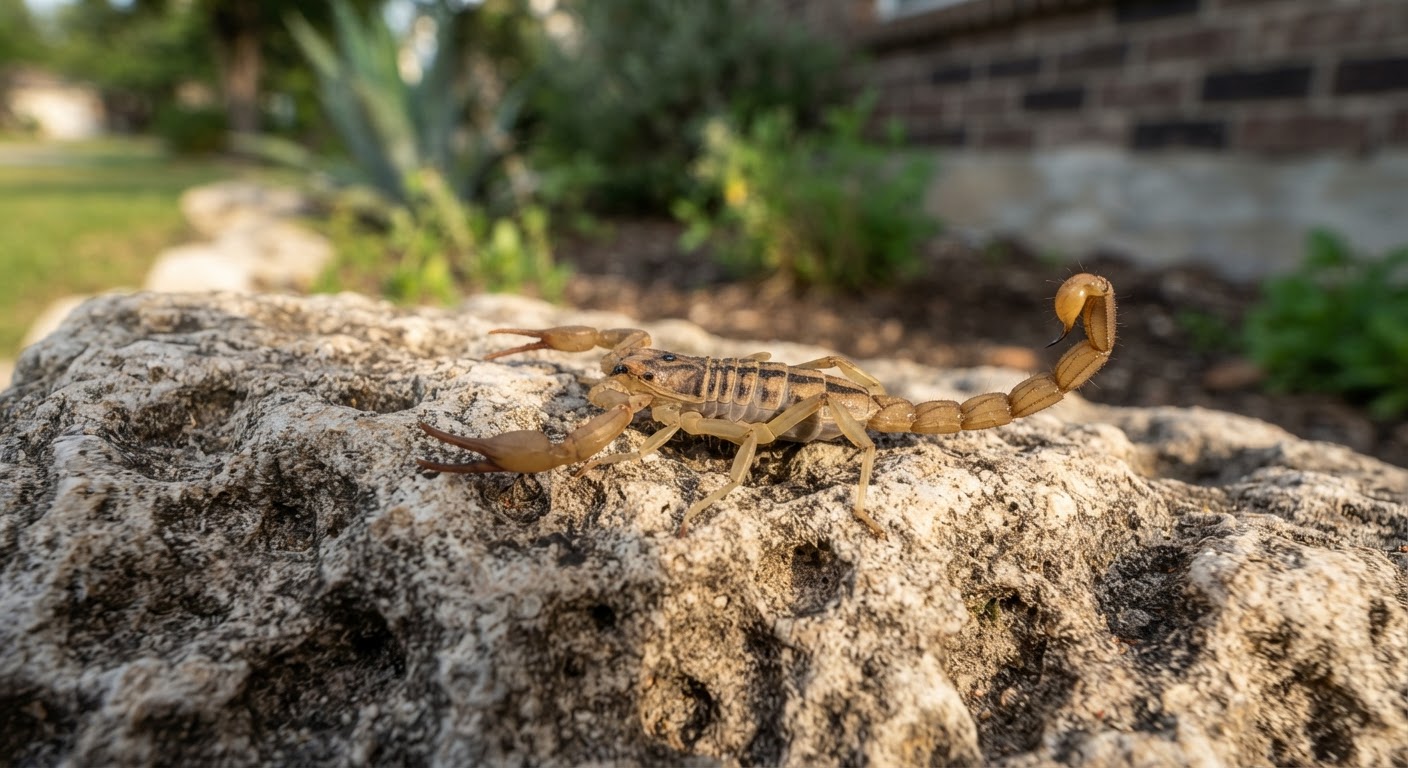
Finding a scorpion inside your home can be an unnerving experience. In San Antonio and the surrounding Texas Hill Country, encounters with scorpions are a common reality of homeownership. Among the various arachnids native to Texas, the striped bark scorpion (Centruroides vittatus) is by far the most widespread species found in residential neighborhoods. Understanding why these pests make their way indoors and how to properly secure your property is key to keeping your living spaces comfortable and safe.
Understanding the Striped Bark Scorpion
The striped bark scorpion is easily identified by its yellowish-tan color and two distinct, dark longitudinal stripes running down the length of its back. Adults typically measure between two and two-and-a-half inches in length, featuring slender pincers and a slender tail tipped with a curved stinger.
Unlike many other scorpion species that prefer to burrow into soft earth or hide strictly under ground-level debris, the striped bark scorpion is a skilled climber. In their natural habitat, they dwell under the bark of dead trees, within rock crevices, and on cliff faces. This climbing ability poses a unique challenge for homeowners, as these scorpions can readily scale exterior brick, stone veneer, siding, and stucco to find high and low entry points into a structure.
Why Do Scorpions Invade San Antonio Homes?
Scorpions rarely enter homes with the intention of encountering humans. Instead, their presence indoors is almost always driven by environmental pressure and basic survival needs: moisture, shelter, and food.
1. Extreme Weather and Heat Fluctuations
San Antonio summers are notorious for sustained heat and prolonged dry spells. As surface soil dries out and outdoor humidity drops, scorpions search desperately for cooler microclimates and moisture. Air-conditioned homes offer immediate relief from blistering temperatures, and condensation along plumbing lines or foundation perimeters provides a reliable water source. Conversely, sudden heavy rainstorms can flood natural outdoor harborages, driving scorpions upward toward dry foundations and exterior walls.
2. Abundance of Food Sources
Scorpions are nocturnal predators that feed on insects, spiders, and other small invertebrates. Properties that have high populations of crickets, roaches, silverfish, or beetles naturally attract scorpions. Bright exterior lighting often draws night-flying insects toward doors and windows, creating an ideal hunting ground for scorpions right outside your entryways.
3. Natural Architecture and Landscaping
Many homes across San Antonio feature limestone facades, flagstone patios, decorative rock beds, and privacy fencing. While these materials are attractive and well-suited to the regional climate, they mimic the natural limestone outcroppings where bark scorpions thrive. Gaps between rocks, hollow landscape timbers, and layers of mulch serve as prime staging grounds immediately adjacent to a house.
Common Indoor Entry Points and Hiding Places
Because striped bark scorpions have flat, flexible bodies, they can squeeze through openings as narrow as a credit card. Once they locate a breach in the home's exterior barrier, they can quickly disappear into structural voids.
- Weep Holes: Brick and stone masonry homes feature weep holes along the bottom courses of brick to allow moisture drainage. Without proper insect-resistant covers, these open slots function as direct pathways into wall voids.
- Door Thresholds and Garage Seals: Worn weatherstripping around exterior doors and degraded rubber gaskets along the bottom of garage doors are frequent points of ingress.
- Attics and Soffits: Thanks to their climbing prowess, scorpions regularly scale vertical walls and enter attics through unscreened soffit vents, roof eaves, and gaps around flashing. Once inside the attic, they may drop down through recessed light fixtures, ceiling vents, or attic access hatches.
- Plumbing and Utility Penetrations: Gaps around outdoor hose bibs, air conditioning refrigerant lines, and electrical conduits provide easy passage into interior walls.
Once inside a home, scorpions seek out dark, undisturbed locations during daylight hours. They are frequently discovered in bathrooms (drawn to residual water in tubs and sinks), laundry hampers, closets, inside shoes left on the floor, and folded linens.
Health Considerations and Stings
The sting of a striped bark scorpion is painful, typically producing a sharp, burning sensation comparable to a severe bee or wasp sting. Localized swelling, redness, and mild numbness or tingling around the sting site are common. For most healthy adults, symptoms subside within several hours without permanent complications.
However, reactions can be more serious in young children, elderly individuals, pets, or anyone with a specific allergic sensitivity to venom. If a sting occurs, wash the area with soap and water, apply a cold compress to reduce swelling, and monitor closely for adverse reactions such as difficulty breathing, muscle twitching, or widespread hives, which require immediate medical evaluation.
Practical Steps to Prevent Scorpion Encounters
Managing scorpions requires an integrated approach that focuses on exclusion, landscape management, and reducing their food supply.
Harden Your Home's Perimeter
- Install fine mesh screens or specialized weep hole covers to prevent pests from crawling behind masonry.
- Replace brittle weatherstripping along exterior doorways, ensuring a tight seal against the threshold.
- Inspect the bottom of your garage door and install a new bottom seal if gaps or tears are visible.
- Use silicone- or polyurethane-based caulk to seal cracks around window frames, hose spigots, and cable entry points.
Modify Outdoor Harborages
- Keep firewood stacks elevated and placed at least twenty feet away from exterior walls.
- Trim tree limbs, shrubs, and ornamental grasses so they do not make direct contact with siding or the roofline.
- Limit organic mulch depth to two inches or fewer near the foundation, or consider replacing organic mulch with decorative gravel near exterior walls.
- Store outdoor toys, garden tools, and building materials off the ground.
Implement Indoor Precautions
- Avoid leaving shoes, clothing, or towels on floors, especially in ground-level rooms or basements.
- Shake out footwear, bedspreads, and bath towels before use if scorpions have been spotted on the property.
- Use an ultraviolet (blacklight) flashlight at night to inspect common areas; striped bark scorpions fluoresce a bright neon green under UV light, making them easy to spot.
The Role of Professional Pest Management
Eliminating scorpions strictly with over-the-counter surface sprays often proves frustrating for homeowners. Scorpions walk elevated on their eight legs, meaning their bodies rarely make direct contact with surfaces treated with generic insecticide films. Furthermore, their thick chitinous cuticles provide natural resistance against many consumer-grade products.
A comprehensive professional strategy targets scorpions at their source. Experienced pest control specialists identify structural vulnerabilities, treat deep harborage areas such as wall voids and attics, and apply targeted perimeter barriers that manage both the scorpions and the insect populations they feed upon.
If striped bark scorpions are finding their way into your living spaces, Golden Field Pest Control provides thorough inspections and dependable pest management services designed specifically for San Antonio properties. Reach out to our team today to schedule an evaluation and protect your home year-round.
Need help from Golden Field Pest Control?
Contact our team to discuss your service needs in San Antonio and surrounding service areas.