Subterranean Termites vs. Carpenter Ants: How to Identify Structural Wood Pests
Learn how to tell subterranean termites and carpenter ants apart by their physical features, nesting habits, and wood damage patterns to safeguard your San Antonio home.
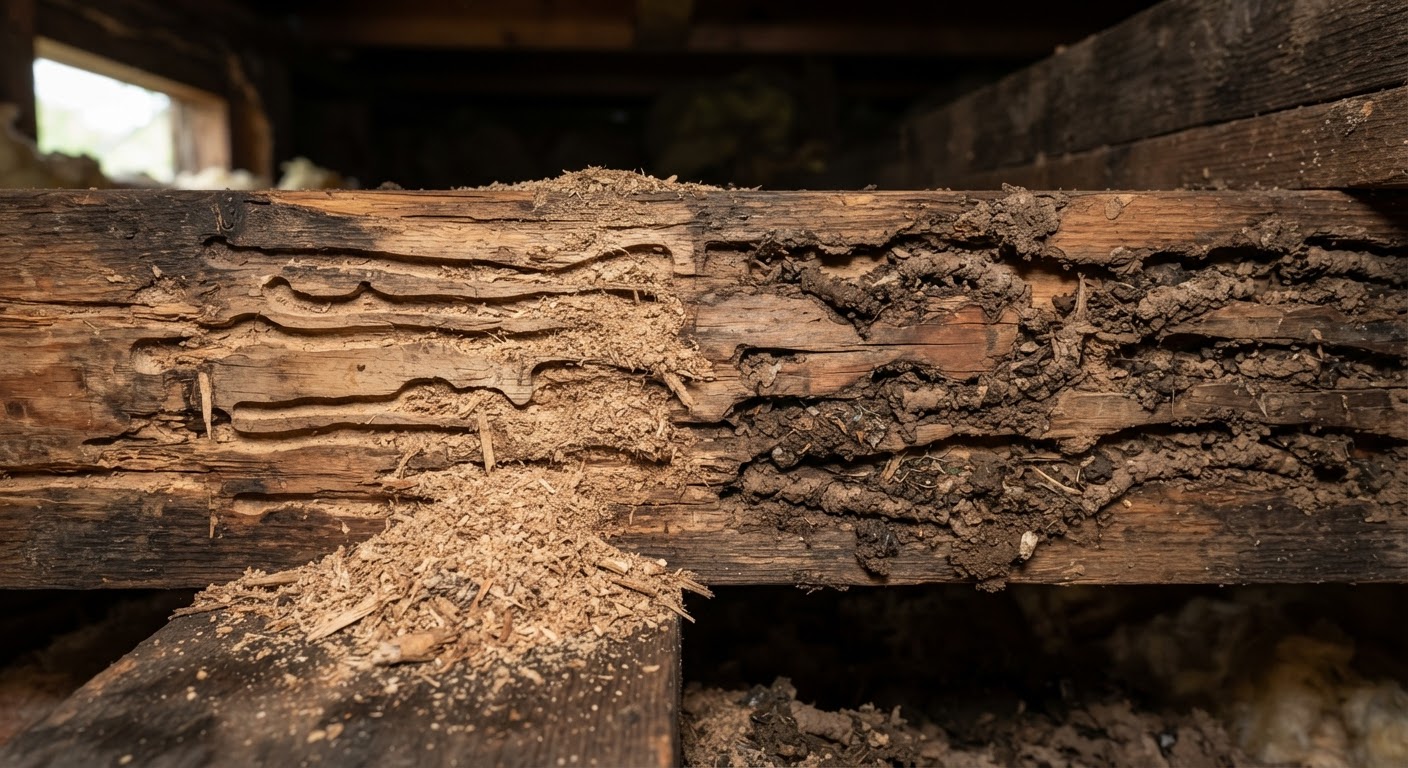
Discovering damaged wood or winged insects inside your home can cause immediate concern. In South Texas, structural wood pests are among the most persistent threats homeowners face. The two primary culprits responsible for residential wood damage are subterranean termites and carpenter ants. While both target wooden elements in and around buildings, their biology, habits, and the type of damage they inflict differ significantly.
Misidentifying these pests can lead to ineffective treatments, unnecessary expenses, and prolonged structural damage. Understanding the distinctions between subterranean termites and carpenter ants helps homeowners in San Antonio recognize early warning signs and take appropriate action before minor issues become major structural repairs.
Physical Differences: Distinguishing the Insects
At first glance, reproductive swarmers (alates) of both species can look remarkably similar. Both emerge in warm weather seeking mates to establish new colonies. However, close observation reveals distinct physical markers that distinguish the two species.
Antennae Shape
One of the clearest anatomical indicators is found in the antennae. Subterranean termites feature straight, beaded antennae that resemble tiny strings of pearls. In contrast, carpenter ants have elbowed antennae that bend sharply at an angle, resembling an arm bent at the elbow.
Waist Structure
The insect's waistline offers another reliable identification checkpoint. Termites possess a broad, uniform body shape with no defined narrowing between the thorax and the abdomen. Their bodies appear straight and pill-shaped. Carpenter ants feature a distinct, pinched waist (known as a petiole), giving them the classic three-segment appearance typical of ants and wasps.
Wing Size and Proportions
If you discover shed wings or flying swarmers, examine their shape and proportion:
- Subterranean Termite Swarmers: Termites have four wings of equal size, shape, and delicate veining. Their wings are significantly longer than their bodies—often nearly twice as long—and break off very easily upon landing.
- Carpenter Ant Swarmers: Carpenter ants also have four wings, but the forewings are distinctly larger and longer than the hindwings. The wings are more durable and remain attached longer than termite wings.
Body Color and Exoskeleton
Worker termites are soft-bodied, pale, and range from translucent white to light cream because they spend their lives hidden from sunlight. Soldier termites share this pale body but have enlarged, amber-colored heads with strong mandibles. Carpenter ant workers, however, have a hard, pigmented exoskeleton. They are typically black, reddish-brown, or a combination of both, and they travel openly in search of resources.
Dietary Habits: Eating Wood vs. Excavating It
Perhaps the most critical biological distinction between these two pests is how they interact with the wood they infest. Although both weaken timber, their reasons for invading structural members are entirely different.
Subterranean termites actually consume wood. They rely on specialized microorganisms in their digestive systems to break down cellulose, the structural component of plant cell walls. This means termites eat lumber, subflooring, drywall paper, cardboard, and decorative framing 24 hours a day, continually drawing nutrients from your home's structural components.
Carpenter ants do not eat wood. Wood offers them zero nutritional value. Instead, they use their strong mandibles to hollow out galleries inside timber to serve as protected nesting chambers. For nourishment, carpenter ants leave the nest to forage for proteins, sugars, nectar, and the honeydew produced by aphids. Because they must forage externally, seeing large black ants trailing across kitchen counters, baseboards, or patios is a frequent indicator of an active carpenter ant colony nearby.
Recognizing the Signs of Wood Damage
Because these insects treat wood differently, the physical evidence they leave behind varies markedly.
Damage Appearance and Gallery Texture
Because subterranean termites feed along the softer springwood grain, their galleries follow an irregular, ragged pattern. Furthermore, termites bring soil and moisture into their feeding sites. As a result, termite galleries are typically packed with a mixture of soil, digested wood particles, and dried mud.
Carpenter ant galleries, on the other hand, look remarkably clean. Because the ants simply carve out living space, they scrape the tunnel walls until they are smooth and clean, often described as having a sanded appearance. There is no mud or soil inside carpenter ant workings.
Mud Tubes vs. Frass Piles
The byproducts left behind outside the wood are clear signatures of which pest is present:
- Mud Shelter Tubes: Subterranean termites require continuous moisture and protection from open air and predators. They construct pencil-thin mud tubes along concrete slabs, foundation footings, crawlspace piers, and drywall to travel between their underground colonies and structural timbers.
- Frass Piles: Because carpenter ants excavate clean tunnels, they must dispose of the debris. They push waste out through small slit-like openings in the wood. Homeowners often find small piles of "frass" beneath infested areas, which resembles fine sawdust mixed with dead insect parts and bits of insulation.
Environmental Factors in San Antonio
The climate and soil conditions in San Antonio create an environment where both pests thrive. Our regional weather features long, hot summers, mild winters, and episodic periods of heavy rainfall. These conditions keep soil temperatures warm year-round, allowing subterranean termite colonies to remain active without entering full dormancy.
Much of San Antonio rests on expansive clay soils. During dry spells, the clay contracts, pulling away from concrete slabs and creating hairline fissures. When heavy rain returns, moisture accumulates near foundations. Subterranean termites utilize these tiny slab cracks and moisture avenues to gain access to framing studs, sill plates, and baseboards without ever being seen on the exterior surface.
Carpenter ants are equally opportunistic, particularly in older neighborhoods with mature shade trees, like King William, Monte Vista, or Alamo Heights. Large oak, pecan, and cedar elm trees frequently harbor parent colonies of carpenter ants in dead limbs or rotted hollows. When branches brush against rooflines or eaves, ants establish satellite colonies within the moist structural wood of attics, fascia boards, or around leaking plumbing fixtures.
Why Accurate Identification Matters for Management
Treating for the wrong pest inevitably fails because control methodologies target entirely different behaviors:
- Subterranean Termite Strategy: Control requires establishing continuous barriers in the soil around the home's perimeter, treating foundational entry points, or deploying localized baiting systems that worker termites carry back deep into the subterranean colony to eliminate the population.
- Carpenter Ant Strategy: Management requires locating the primary and satellite nests. Applications focus on void treatments, non-repellent transfer products along active foraging trails, and correcting structural moisture problems that attract nesting queens.
Applying an over-the-counter surface spray to carpenter ant trails often simply scatters the colony into new areas of the house (a process known as budding), while applying ant sprays to termite mud tubes accomplishes little against the underground nest containing hundreds of thousands of individuals.
Steps to Protect Your Property
Prevention for both pests starts with moisture control and reducing wood-to-ground contact. Keep garden mulch, firewood, and scrap lumber away from your foundation. Ensure gutters flow properly away from the structure, fix leaking outdoor hose bibbs, and keep tree limbs trimmed back from rooflines. By eliminating unnecessary dampness and entry paths, you make your home far less inviting to wood-destroying organisms.
If you notice mud tubes along your foundation, accumulating piles of sawdust, discarded insect wings on windowsills, or hollow-sounding wood, seek a thorough professional assessment immediately. Golden Field Pest Control provides dedicated wood pest evaluations throughout San Antonio to pinpoint the exact source of structural threats and implement targeted, effective solutions for long-term protection.
Need help from Golden Field Pest Control?
Contact our team to discuss your service needs in San Antonio and surrounding service areas.